
Tesla paint has a reputation, and it's earned. The clear coat runs thinner and softer than most comparable vehicles — great for emissions, rough on your finish. It swirls easily, etches from bird droppings faster, and shows every wash mistake. Which is why Tesla owners get quoted thousands for PPF or a professional ceramic install before they've made the first payment.
There's a middle path, and it takes about ninety minutes in your driveway. It's called wash, clay, seal — three steps, done in a single wash, that leave your paint decontaminated and protected for months. Here's the exact process.
Why Tesla paint needs a different approach
Two things make Tesla finishes higher-maintenance than most:
- The clear coat is soft. It marks more easily than a comparable German finish, so every contact wash carries more swirl risk. Technique matters more than it does on harder paint.
- Contaminants bond fast. Rail dust, brake dust, industrial fallout, and tree sap embed into the clear coat. Washing removes what's loose — it does nothing for what's bonded. That's the roughness you feel when you run a hand over "clean" paint.
Standard advice is PPF or a pro ceramic install. Both are legitimate, both cost real money. Wash-clay-seal is what you do in between — or instead, if you're a DIY owner who'd rather spend ninety minutes than two thousand dollars.
What you'll need
- A pH-neutral shampoo — we're using Pure Car Shampoo (no gloss agents or fillers, so nothing interferes with the sealant later)
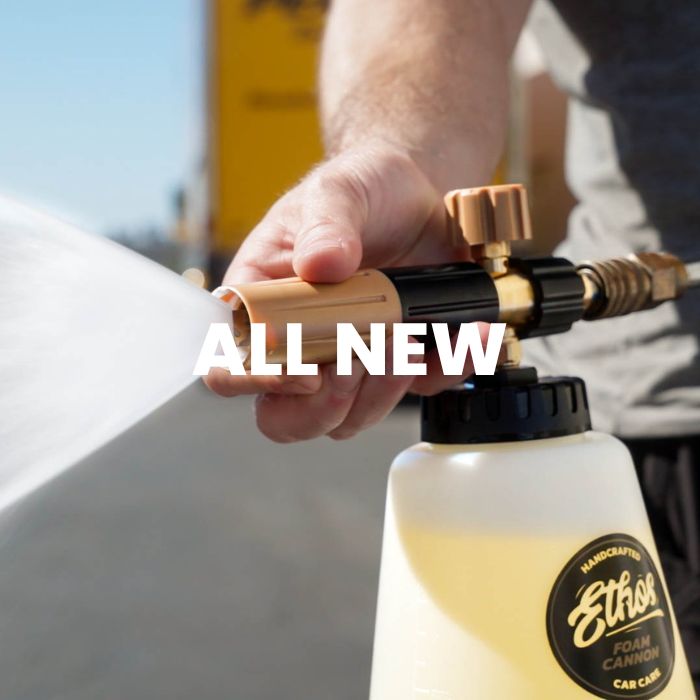
- A foam cannon (optional but strongly recommended — it doubles as your clay lubricant)
- Two buckets, a wash mitt, and grit guards
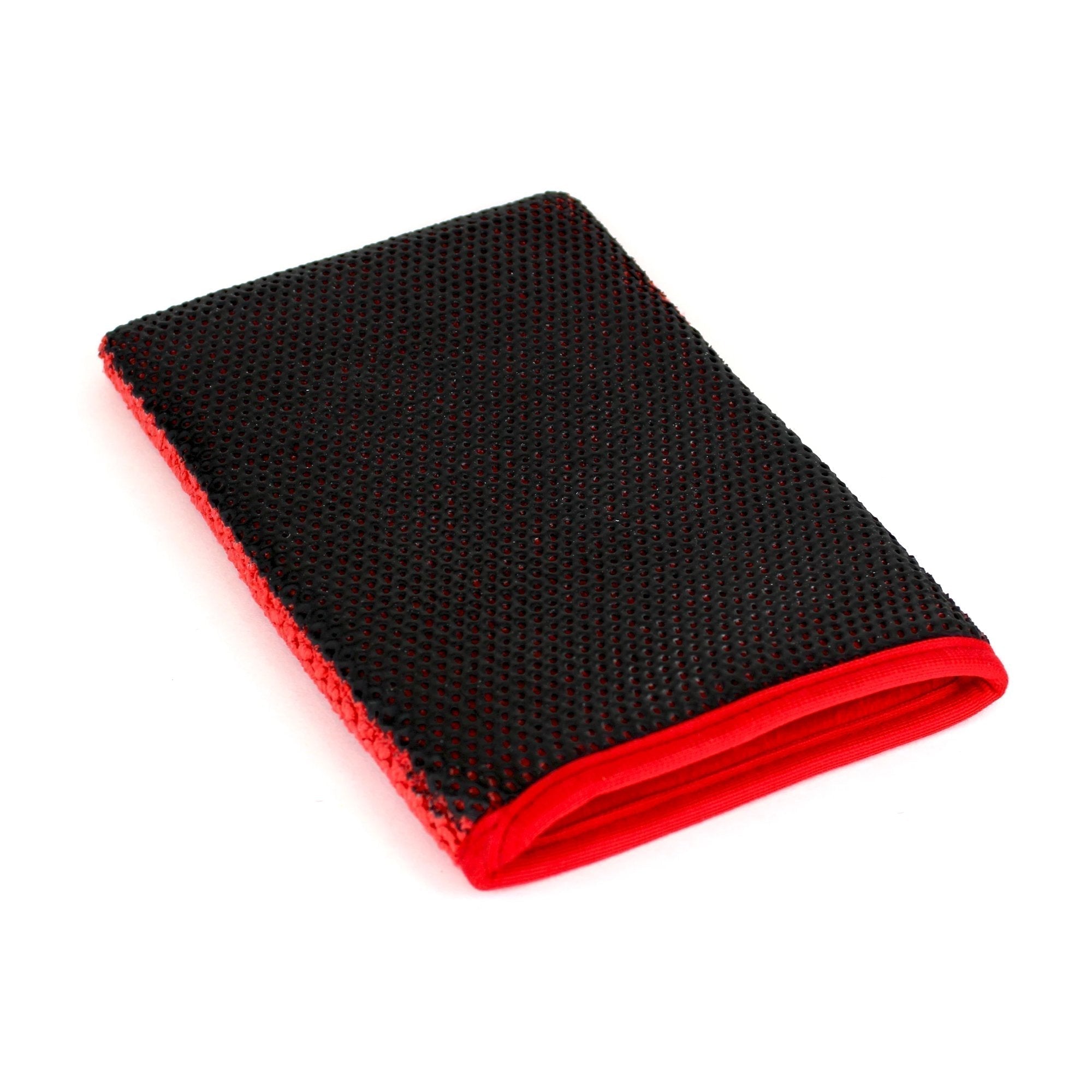
- A clay towel — faster and more forgiving than a traditional clay bar
- A plush drying towel
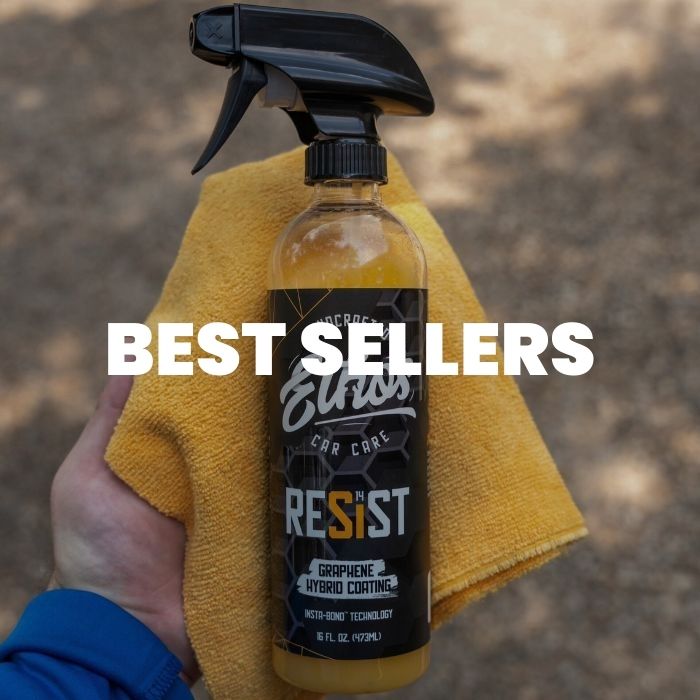
- RESIST graphene spray coating as the sealing step

Step 1: Foam and wash
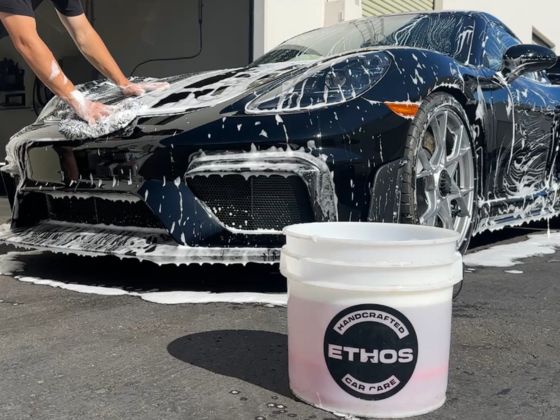
Add a couple of ounces of shampoo to your wash bucket and a couple to the foam cannon. Foam the entire vehicle and let it dwell.
This step isn't for show. The foam emulsifies and lifts loose dirt before anything physical touches the paint — which is the single most effective swirl-prevention move you can make on soft Tesla clear coat. Rinse the foam away, then do a two-bucket contact wash with your mitt, working top-down (upper panels are cleaner; you don't want to drag lower-panel grit across the roof). Rinse the mitt often.
When you're done, run your hand across a panel. It'll still feel rough in places. That roughness is bonded contamination — washing was never going to remove it. That's what step two is for.
Step 2: Clay — while the car is still soapy
Here's the shortcut that makes this whole process fast: re-foam the vehicle and use that foam as your clay lubricant.
The traditional sequence is wash → dry → spray a clay lube → clay → wipe → dry again. You're drying the car twice and buying a dedicated lubricant. Instead, foam the car a second time and clay directly through the soap. The surfactants in a quality shampoo lubricate the surface as well as a dedicated clay lube, and you skip an entire dry cycle.

- Dunk the clay towel in your wash bucket to wet it.
- Glide it lightly over the foamed surface — about the weight of your hand, no pressure. On soft paint, pressure is what causes marring.
- Work panel by panel. Flip to a clean side as each section loads up, and rinse the towel in the bucket regularly — you're pulling physical contaminants off the paint and you don't want to drag them back across it.
- Check by feel as you go. The surface should turn glass-smooth. Anywhere still rough gets another pass.
The clay towel is safe on every exterior surface — paint, glass, headlights, and trim. Do all of it. Then rinse the car completely.
Step 3: Seal
Bare, freshly-clayed paint has zero protection — claying strips whatever was there. Sealing immediately is not optional, and there are two ways to do it.

Method 1: As a drying aid (fastest)
With the car still wet from the final rinse, spray RESIST directly onto the wet surface and wipe the water off with your drying towel. You're drying and sealing in one motion — no separate application pass. This is the method we prefer for maintenance washes.
Method 2: On dry paint (maximum protection)
Dry the vehicle completely first, then lightly mist RESIST panel by panel and spread it with a plush microfiber, buffing to a high shine. Cover everything, glass included. Less is more — a couple of sprays per panel is plenty; RESIST is a concentrated graphene-ceramic hybrid and over-applying just creates streaks you'll have to buff out.
How often should you do this?
Every three to four months. Contaminants bond to your paint continuously whether you wash weekly or not, so this is maintenance, not a one-time fix. On a coated car, the wash-clay-seal cycle strips the accumulated junk and tops up protection. On an uncoated Tesla, it is your protection.
A tell we look for: if water lies flat on the paint instead of beading, protection has worn thin — time to run the process again.
Frequently asked questions
Is claying safe on Tesla's soft paint?
Yes, with proper lubrication and light pressure. Clay shears bonded contaminants off the clear coat mechanically — the damage stories come from dry claying, dropped clay, or pressing hard. Keep the surface soapy and let the towel do the work.
Do I need PPF or ceramic coating on a Tesla?
They're the strongest options — PPF for physical impact, professional ceramic for chemical and UV resistance — and both cost accordingly. A DIY graphene spray sealant like RESIST won't stop rock chips, but it gives you months of hydrophobic, UV, and contaminant protection for a fraction of the cost, and it's what most owners actually need between professional services.
Can I use a foam cannon as a clay lubricant?
Yes — that's the core of this method. A quality pH-neutral shampoo's surfactants lubricate the surface as well as a dedicated clay lube while continuing to lift contamination. It also removes an entire dry-and-reapply cycle from the process.
Can I wash a Tesla in an automatic car wash?
Tesla's own care documentation advises against it, and on soft clear coat, brush washes are a swirl factory. Touchless is safer; a foam-cannon pre-wash and two-bucket method is safer still.
How long does the protection last?
Expect months from a spray graphene sealant, depending on climate, wash frequency, and whether the car lives outdoors. Re-running wash-clay-seal every 3–4 months keeps it topped up.
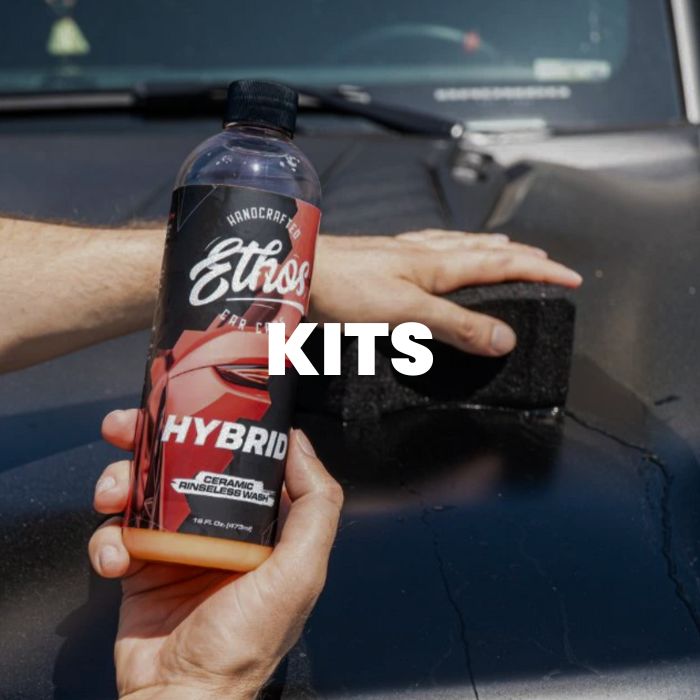
Everything for the wash-clay-seal method
Pure Shampoo, Clay Towel, and RESIST — decontaminated, protected paint in one afternoon.