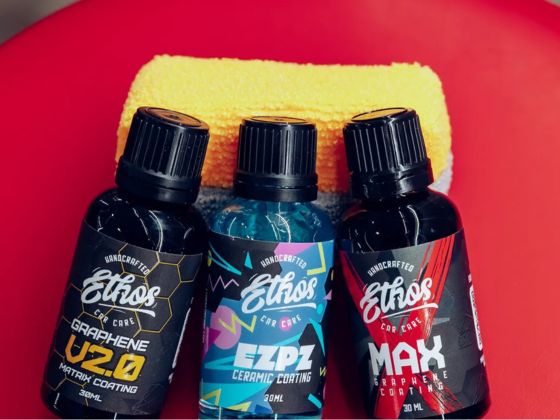
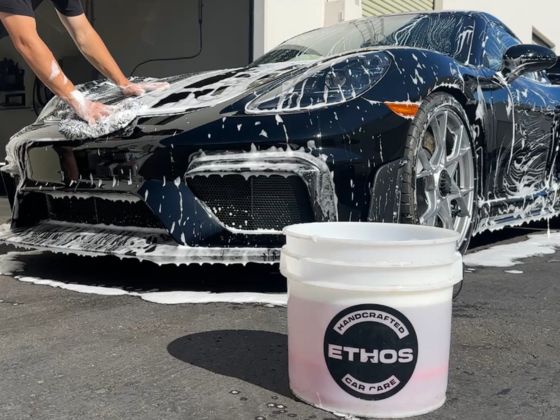
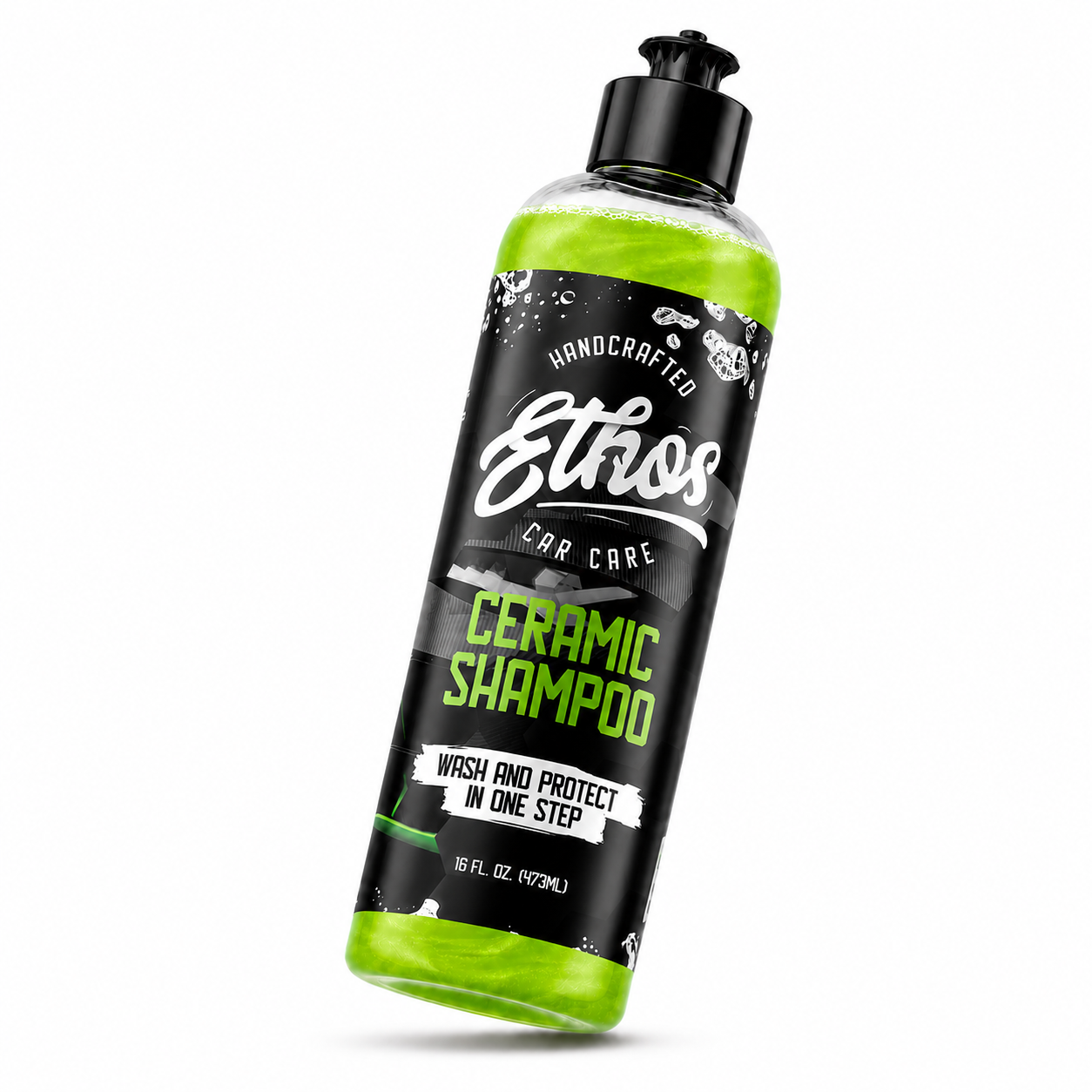
The maintenance cycle at a glance
Every 1 to 2 weeks: Foam pre-wash, two-bucket wash, dry immediately.
Every 4 to 6 weeks: Top up protection with a spray coating.
Every 4 to 6 months: Iron remover, clay, then re-seal.
Watch: Coating Maintenance in Practice
The full routine, start to finish, on a coated vehicle.
Why Ceramic Coatings Still Need Maintenance
A coating is a sacrificial layer. It takes the abuse so your clear coat does not, and that means it slowly gives ground to UV, heat, road film, and repeated washing. Maintenance is not about rescuing a failing coating, it is about replacing what wears off before performance drops.
There is a second reason it matters more on a coated car: once a coating is applied, you cannot polish the paint without removing the coating. Every swirl you introduce during washing is one you cannot buff out. Safe technique stops being optional.
Step 1: Wash Every 1 to 2 Weeks
The goal of a maintenance wash is to remove contamination with as little physical contact as possible.
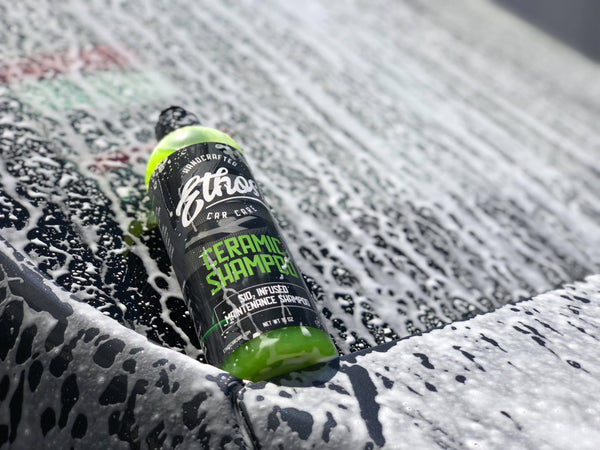
Start touchless
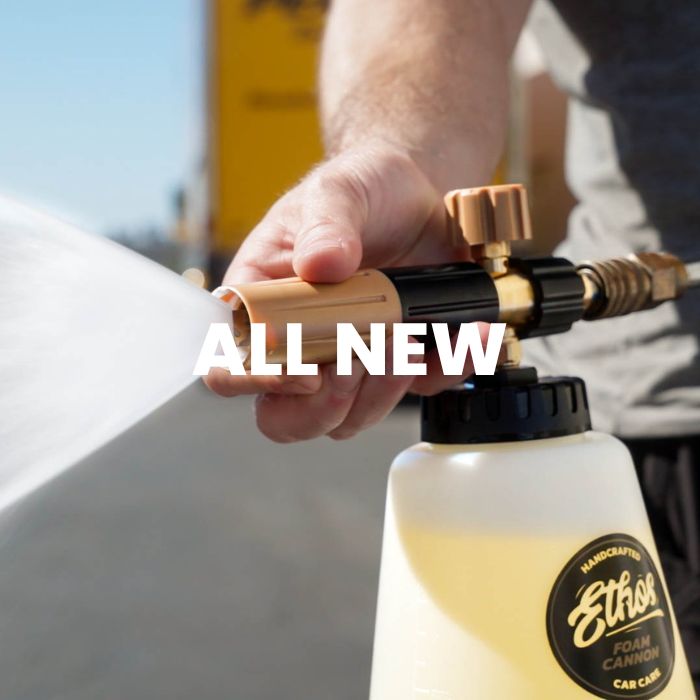
Pre-soak the vehicle with a foam cannon and let it dwell. Foam lifts grit off the surface before your mitt ever touches it, and contact washing is the single biggest source of marring on coated paint. Rinse thoroughly from the top down.

Thick clinging foam that lifts grit before contact. The cheapest swirl insurance you can buy for a coated car.
Use a coating-safe shampoo
Most car soaps contain gloss agents, waxes, or fillers that sit on top of your coating and mask its hydrophobic behavior. You stop seeing beading, assume the coating failed, and it was buried the whole time. Dish soap is worse: it strips protection outright.
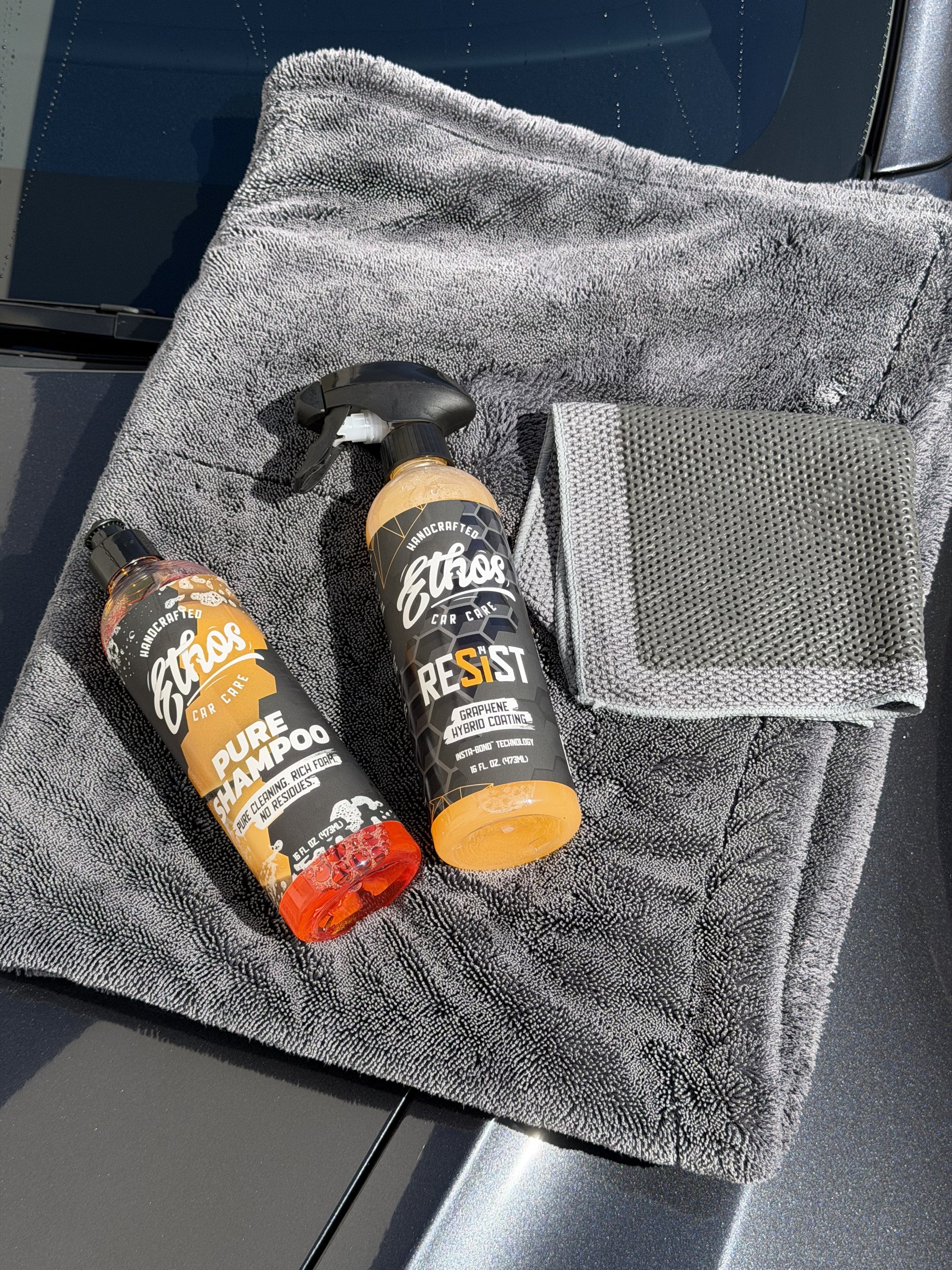
A pH-neutral shampoo with no fillers cleans the coating without degrading or masking it. SiO2-infused formulas add a small amount of protection with every wash. Use 2 to 3 oz in a foam cannon, or 1 oz per 2 gallons in a bucket.

pH-neutral and SiO2-infused. Cleans and conditions your coating instead of stripping or masking it.
Two-bucket contact wash
One bucket of soap, one of clean rinse water, a grit guard in each. Wash top down, rinse the mitt frequently, and use no pressure. Let the lubrication do the work.
Dry immediately
Never let a coated car air dry. Water spots are mineral deposits, and on a coating they can etch if left to bake in the sun. Use a plush drying towel and blot rather than drag.

Twisted loop microfiber that dries a full vehicle in one pass, and doubles as your drying aid applicator.
Step 2: Top Up Every 4 to 6 Weeks
This is the step most owners skip, and it is the difference between a coating that performs for its full rated life and one that disappoints at month eight.
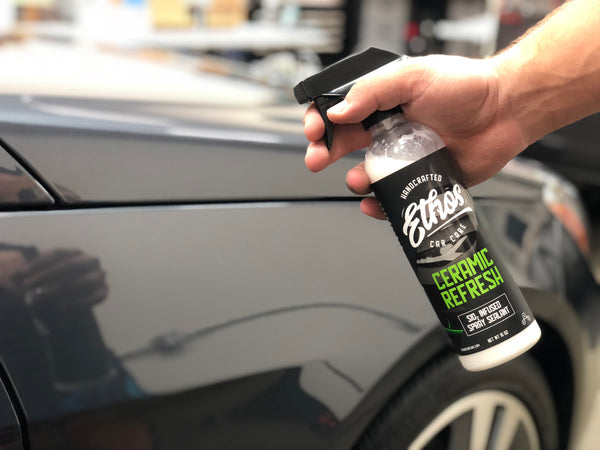
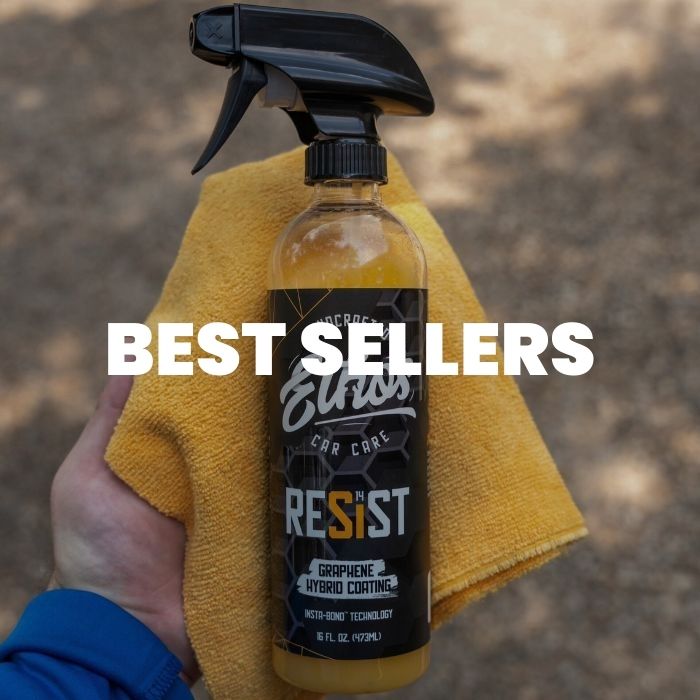
A spray coating bonds over your existing layer and replaces the protection that normal wear removes. Two ways to apply it:
- As a drying aid (fastest). After your final rinse, mist onto still-wet paint and wipe the water off with your drying towel. You dry and protect in a single pass.
- On dry paint (maximum protection). Dry the vehicle first, then mist panel by panel and buff with a clean plush microfiber. A couple of sprays per panel is plenty.
Cover everything: paint, glass, trim, and wheels.

Bonds to any coating, ceramic or graphene, restoring gloss, slickness, and water beading. 6 to 12 months per application.
Step 3: Decontaminate Every 4 to 6 Months
Over time, contamination bonds to the coating itself: rail dust, brake dust, industrial fallout, tree sap. You will notice it as reduced beading or a faint roughness when you run a hand across clean paint. Washing will not remove it, and applying a topper over it just seals it in.
Chemical decontamination
Spray an iron remover onto cool, dry paint and wheels and let it dwell 3 to 5 minutes. The color change to red or purple is the chemical reaction dissolving embedded iron. Rinse thoroughly, and never let it dry on the surface.

Color-changing formula that dissolves embedded iron and brake dust on contact. Acid-free and safe on coated finishes.
Mechanical decontamination
Follow with a clay towel to shear off what chemistry could not dissolve. Keep the surface generously lubricated and use light pressure. Done correctly, this is safe on a coated finish and restores that glass-smooth feel.

Shears off bonded contaminants washing leaves behind. Lasts roughly 4x longer than a traditional clay bar.
Re-seal
Claying removes protection along with the contamination, so always follow a decon cycle with a fresh application of RESIST.
When It Is Time to Re-Coat
If your coating has reached the end of its rated life, or performance has dropped even after a full decon and top-up, it is time to reapply. Prep decides everything:
- Wash thoroughly with a pure, additive-free shampoo.
- Chemically decontaminate with an iron remover.
- Clay the paint until it feels glass smooth.
- Correct any defects. A coating seals in whatever is underneath, including swirls and scratches.
- Wipe down with Detox to strip polishing oils and residues so the new coating can bond.
Skipping the Detox step is the most common cause of a coating that will not bond properly.
What Not To Do
- Avoid automatic brush washes. They are a swirl factory on any paint, and especially punishing on a surface you cannot polish. Touchless is acceptable, hand washing is better.
- Do not use wash-and-wax products. The wax layer masks your coating's hydrophobics and makes a working coating look failed.
- Never use dish soap. It strips protection, dries out trim, and foams poorly.
- Do not let contamination sit. Bird droppings and bug splatter are acidic and can etch through a coating in the sun. Remove them the day you see them.
- Do not top up over bonded contamination. You will seal it in. Decon first.

Everything above, in one box
The Coating Maintenance Kit pairs RESIST, Ceramic Shampoo, the MAX drying towel, and plush microfibers. Covers your weekly wash and your 4 to 6 week top-up. Works on ceramic and graphene coatings alike.
Frequently Asked Questions
How often should I wash a ceramic coated car?
Every 1 to 2 weeks with a pH-neutral, coating-safe shampoo. More often if the vehicle sees heavy road film, salt, or industrial fallout.
Can I wax over a ceramic coating?
You can, but you should not. Wax sits on top of the coating and masks its hydrophobic behavior. Use an SiO2 or graphene topper instead.
Will regular washing remove my ceramic coating?
No. Proper washing with a pH-neutral shampoo maintains a coating rather than degrading it. What damages coatings is harsh chemistry, automatic brush washes, and neglect.
Why did my ceramic coating stop beading water?
Usually contamination or a masking wax rather than actual failure. Wash with a pH-neutral soap, decontaminate, and top up. Beading typically returns.
How long does maintenance take?
A routine wash runs 30 to 60 minutes. A full decontamination and re-seal takes 1 to 2 hours.
Do I need special products, or will any car soap work?
Coating-safe matters. Any pH-neutral shampoo without gloss agents or wax will work. Products formulated for coatings also add protection as they clean.
The Short Version
- Every 1 to 2 weeks: Foam pre-wash, two-bucket contact wash with Ceramic Shampoo, dry immediately.
- Every 4 to 6 weeks: Top up with RESIST.
- Every 4 to 6 months: Iron remover, clay, then re-seal.
Do those three things on those three clocks and a quality coating will hold its gloss and hydrophobics for years.
Browse the full coating maintenance collection, or see our quick reference schedule.