

Paint overspray is the contamination problem people discover by touch — the paint looks fine from five feet away, but run your hand across it and it feels like fine sandpaper. It happens more easily than most people think: parking near a construction site, a neighbor spraying a fence, driving past road-line painting, or a nearby body shop venting spray. The good news: in most cases you can remove it completely at home, without repainting and without a body shop bill.
Here's exactly how to do it safely, in order of least to most aggressive.
First: confirm it's actually overspray
Run a clean hand (or better, your hand inside a thin plastic sandwich bag — it amplifies texture) across the panel after washing. Overspray feels like gritty, evenly-distributed roughness across a whole area, often on horizontal panels, glass, and trim facing one direction. If you feel isolated rough bumps instead, that's likely tree sap or tar — different fix. If the surface is smooth but discolored, that's staining, not overspray.
What you'll need
- pH-neutral car soap and wash supplies (two buckets, mitt)
- A clay mitt or clay towel — or a traditional clay bar for heavy contamination
- Clay lubricant — a quick detailer or a soap-and-water solution
- Microfiber towels
- Optional, for stubborn spots: a finishing polish
- Optional, if you plan to re-protect after: Detox panel prep
Step 1: Wash the car first — never clay a dirty panel
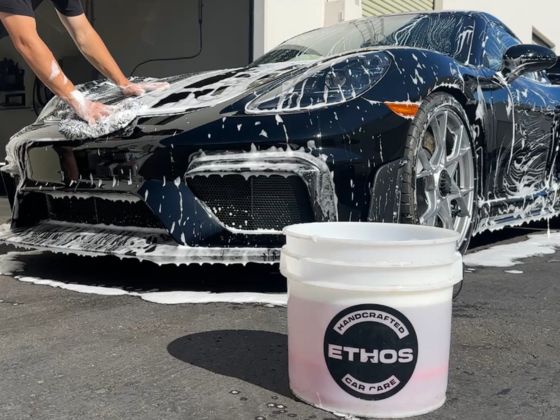
Claying over surface dirt grinds it into your clear coat. Do a full wash — foam pre-wash if you have a foam cannon, then a two-bucket contact wash — and dry. Light overspray occasionally comes off in the wash alone; check the panel by touch before going further.
Step 2: Clay the affected panels
This is the step that actually removes overspray. Synthetic clay (a mitt or towel) shears the bonded paint particles off the surface without damaging your clear coat — as long as you keep it lubricated.

- Soak the clay mitt in your rinse bucket for a minute to soften it.
- Spray the panel generously with clay lubricant — the surface should be wet, never dry. Dry claying scratches; lubrication is the whole safety mechanism.
- Glide the mitt across the panel in straight lines with light pressure — let the clay do the cutting. You'll hear and feel the grit at first.
- Keep going until the panel goes silent and glassy-smooth under the mitt. Re-spray lubricant often.
- Rinse the mitt frequently to release the paint particles it's pulled off — and if you drop it on the ground, rinse it thoroughly or retire it; a gritty mitt becomes sandpaper.
- Wipe the panel with a clean microfiber and re-check by touch. Repeat on every affected panel, including glass and trim — clay is safe on both.
For heavy industrial overspray that a mitt won't fully clear, step up to a traditional clay bar — fold it to expose fresh clay as it loads up, and never reuse a dropped bar.

Step 3: Polish any stubborn spots (only if needed)
If a few embedded specks survive the clay, a light hand polish with Perfect Polish on a foam applicator will level them. Work small sections, light pressure. If large areas resist claying and polishing entirely, the overspray may be a catalyzed industrial coating — that's the point to get a professional detailer's opinion rather than keep rubbing.

Step 4: Re-protect the paint
Clay is mildly abrasive by nature — it removes the contamination and whatever wax or sealant was on the panel. After claying, the surface is bare and should be re-protected. Wipe down with Detox to remove clay-lube residue, then apply your protection of choice — Ceramic Wax for months of protection, or a spray coating for maximum durability. A protected surface also makes the next contamination event dramatically easier to remove.

What NOT to do
- Don't use solvents blindly. Lacquer thinner, acetone, and "overspray removers" can dissolve your clear coat along with the overspray. Mechanical removal (clay) is finish-safe; harsh chemistry is a last resort for professionals.
- Don't dry-scrub or use abrasive pads. Magic erasers and scouring pads permanently dull clear coat.
- Don't skip the wash. Clay over dirt and you'll trade overspray for swirl marks.
- Don't clay in direct sun or on a hot panel — the lubricant flashes off and you're dry-claying.
Frequently asked questions
Does claying remove overspray completely?
In most consumer cases, yes — clay physically shears bonded paint particles off the clear coat. Heavy industrial or catalyzed coatings may additionally need light polishing or professional attention.
Will removing overspray damage my paint?
Not if you clay with proper lubrication and light pressure. Clay is a decades-proven, finish-safe process — the damage stories come from dry claying, dropped clay, or solvent shortcuts.
Can I remove overspray from glass and plastic trim?
Yes — clay works on glass, trim, and headlights. Glass tolerates slightly more pressure than paint.
How much does professional overspray removal cost?
Shops typically charge a few hundred dollars or more depending on severity and vehicle size — which is why the DIY clay route is worth attempting first for typical cases. If the overspray came from a third party (a contractor, a neighboring business), document it with photos before removal; their insurance may cover professional correction.
Whose insurance pays for overspray damage?
If a business caused it (painting contractor, roadwork, body shop), their liability insurance typically covers removal — photograph the damage, note the date and source, and get a professional estimate before DIY if you intend to file a claim.
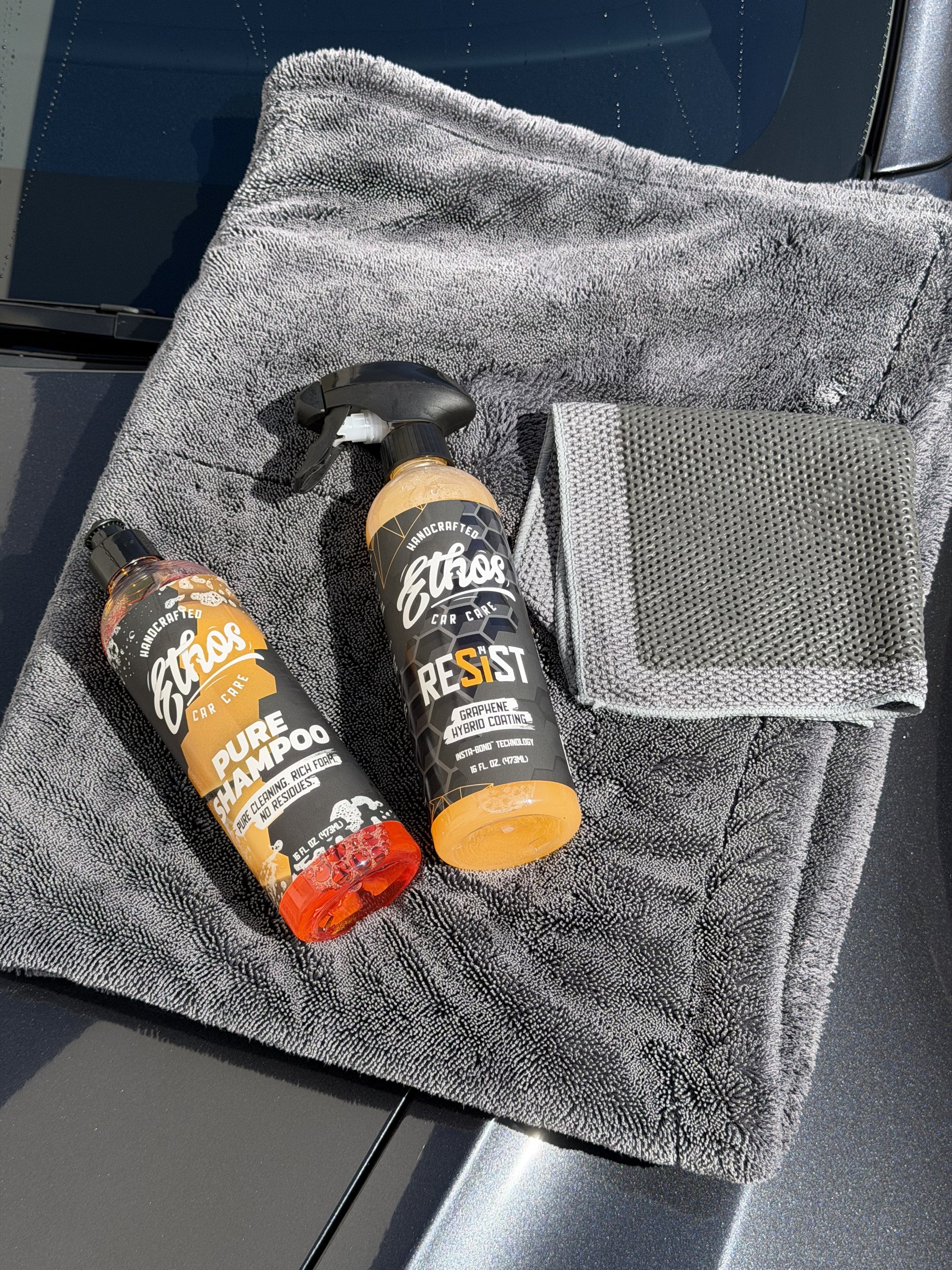
Everything you need to decontaminate your paint
Clay Mitt for the removal, Detox for the prep, protection to finish — smooth glass-slick paint in an afternoon.