


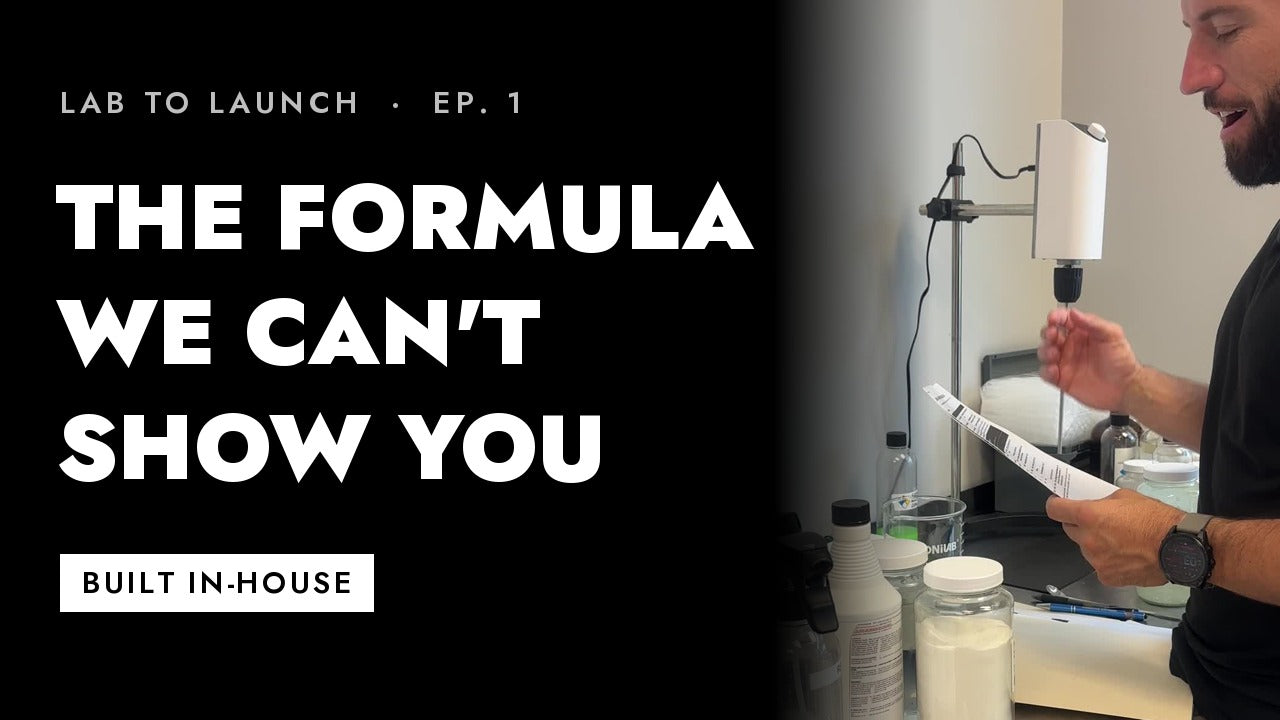
Every Ethos formula starts on our own lab bench. In the first episode of Lab to Launch, Tim takes you onto that bench while we build a brand-new pH-neutral car shampoo from scratch. We can't show you the recipe, but everything else is on the table.
What's in this episode
0:08 Why we formulate in-house
2:11 The build sheet
3:30 Step 1: Water first
5:27 Step 2: Getting the foam balance right
7:31 Step 3: Finish the blend
9:24 Step 4: Bottle it up
11:38 What's next: the wash test
Why we formulate in-house
Tim has been detailing cars professionally since 2010, starting with mobile detailing and then our own detail shop here in Vista, California. That shop is the reason we make our own chemistry. Lab versions of a product get tested on cars in real, everyday use, and the results come straight back to the bench.
"We're able to shrink our supply chain and close that feedback loop," is how Tim puts it. We read the good reviews, but we pay the most attention to the bad ones, because that is where the next improvement comes from.
And there is no shortcut. As Tim says in the video, there is no chemist, magic pill, or AI that knows the perfect formula from A to Z. The magic is in the testing.
The build sheet (the part we can't show you)
Every formula starts with a build sheet. It lists which raw materials go in, at what concentration, and in what order. That is exactly the information a competitor would want, so it stays off camera.
What we can tell you is what this shampoo is being built to do:
- pH neutral, so it is safe for everyday washing without stripping your protection
- Strong cleaning for the weekly wash
- Great slip and feel under the mitt
- Foams well in a bucket and in a foam cannon
We are building three versions today, which we call "arms." Each one changes the levels of certain ingredients so we can A/B test them against each other and find the right balance.
Step 1: Water first
Every formula starts with water, and it is one of the most overlooked parts of the process. Many blenders use tap water, which can throw a formula off. We use deionized water that has been through reverse osmosis and UV filtration, so we start from a clean slate before anything else goes in.
Precision matters from the first pour. Too much or too little water throws off every ratio that follows. A mild, low-active formula is forgiving enough to eyeball. A formula that is maxed out for performance, with more active ingredients and more of them, is not. Those ingredients can clash, so every measurement counts.
Order matters too. Tim compares it to baking cookies: you don't put the chocolate chips in before the flour and water. Each ingredient goes in at its own step so everything blends together properly.
Step 2: Getting the foam balance right
A car soap uses several cleaning agents, and what makes it good isn't any single one of them or how much you use. It is the balance between them.
One might build a lot of foam volume that collapses quickly. Another might make slick, wet foam without much volume. Push both too hard and they compete, and you end up with neither. Finding that balance is where the trial and error comes in.
Mixing force, which formulators call shear, matters just as much. Too much and some ingredients break down and stop working. Too little and things fall out of suspension, leaving an unstable formula. The goal is for every ingredient to be fully blended in, evenly.
Step 3: Finish the blend
Next comes an ingredient that helps the foam build and stay foamy longer, which is a big part of what makes a shampoo enjoyable to use. Then comes the last addition, a high-active cleaner. It does two jobs: it helps bind everything together, and it adds cleaning power.
The result stays pH neutral, neither acidic nor alkaline, which is what you want for an everyday wash that cleans well without stripping your protection. Then the batch mixes for about ten minutes so everything is fully combined.
Step 4: Bottle it up
This is the first of the three arms, and Tim admits his bias: he thinks it will be the winner, so it got built first. It's labeled batch 003, "For the Win." Often his first pick isn't the winner, and the testing is where the surprises show up.
Right now the sample has no color and no scent, and it just smells like soap. That is on purpose. Color and scent are the easy part, and there's no reason to add them before a formula has proven it works.
It is also a thin shampoo, by design. Thicker shampoos are sometimes made that way for stability, but when a formula doesn't need it, thinner is easier to use. It pours cleanly into a foam cannon or a bucket, and you can get every last drop out of the bottle.
What's next: the wash test
The bench build is only half the story. Next, all three arms go through our testing process on real cars. Then we come back to the lab and decide which one is a hit and which is a fail. Subscribe on YouTube so you don't miss Episode 2.
Made the same way: formulated in-house, tested on real cars
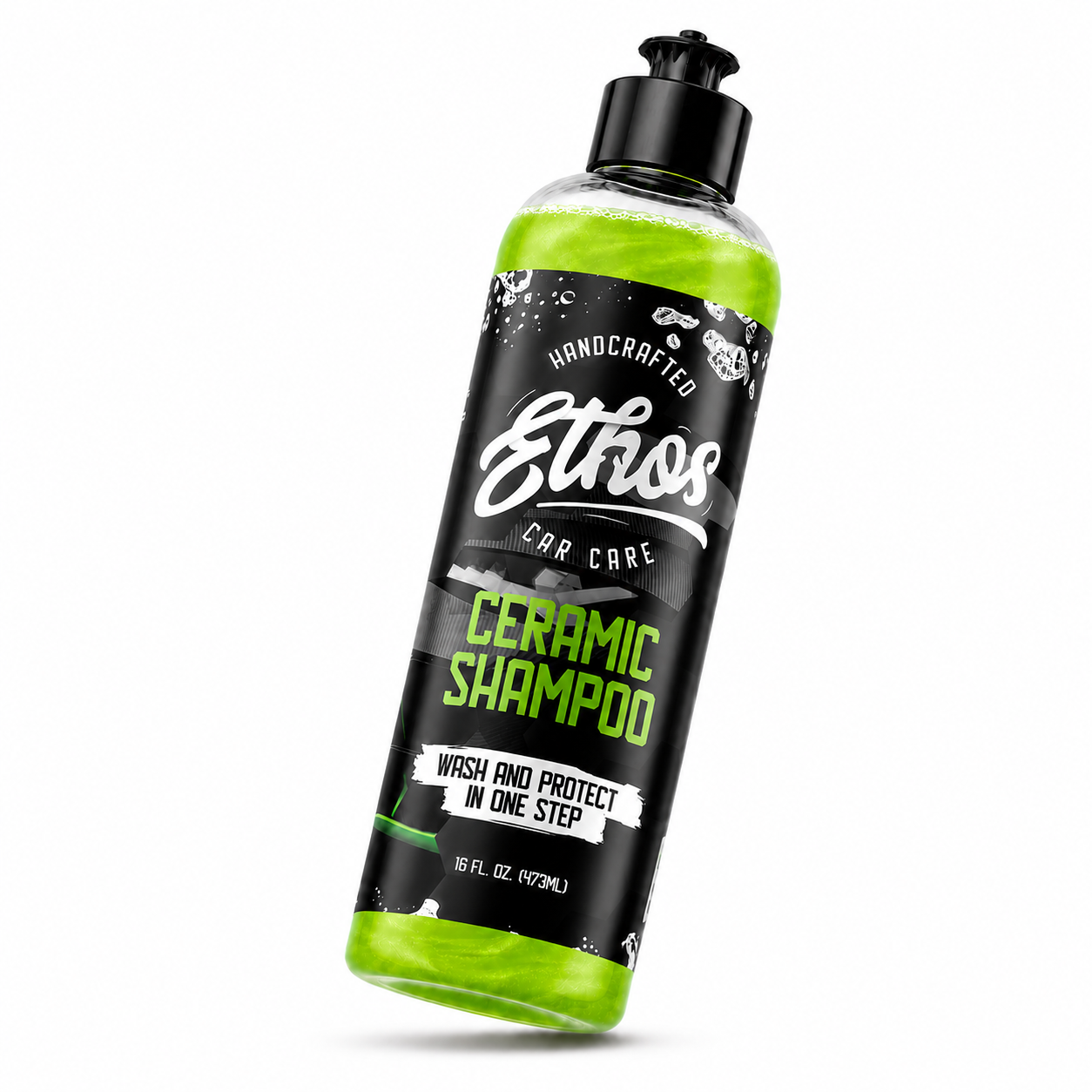
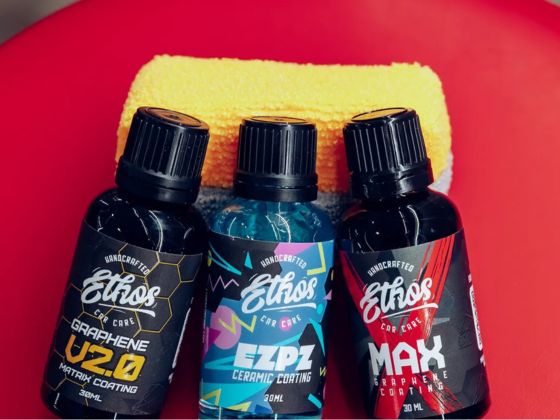
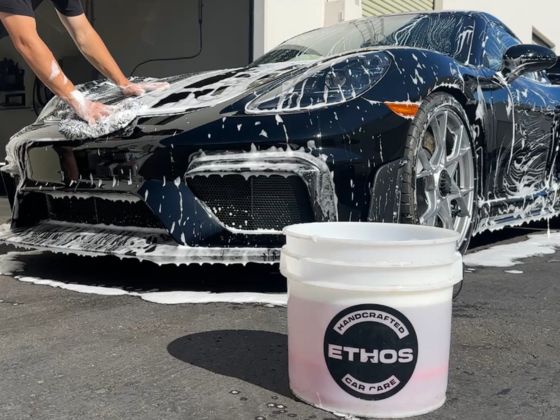
While the new shampoo is in testing, here are the shampoos in our current lineup.
Frequently asked questions
Does Ethos make its own products?
Yes. We formulate in-house, and we test lab versions on cars at our own detail shop in Vista, California.
Why not show the full formula?
The build sheet lists every raw material, its concentration, and the order it goes in. Sharing it would hand competitors the work. The process, though, is fair game.
Why does water quality matter in a car shampoo?
Water is the base of the formula. Tap water can interfere with how the other ingredients behave, so we use deionized water that has been through reverse osmosis and UV filtration, for a clean, consistent start.
Why is this shampoo thin instead of thick?
Thickness is sometimes added for stability. When a formula doesn't need it, a thinner shampoo pours more easily into a foam cannon or bucket and empties the bottle completely.
When will the new shampoo be available?
Not until testing is finished. Three versions are going through our testing process first, and we'll share the results in the next episode.