



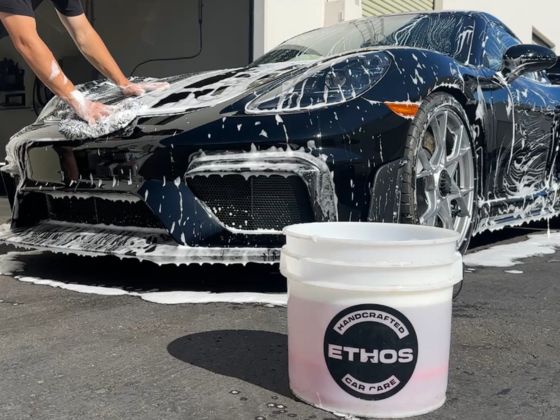

Water spots are the frustration every weekend detailer knows: you finish a wash, the panel dries in the sun, and it leaves ugly spots all over the paint. The good news is that most are mineral deposits that wipe away with the right solution. The bad news is that a few have etched into the clear coat and need correction. This guide shows you how to tell which is which, remove each type safely, and seal the paint so they stop coming back.
What causes water spots, and why they vary
Tap water, sprinkler overspray, and rain all carry dissolved minerals, mostly calcium and magnesium. When a droplet sits on paint and evaporates in the sun, the water leaves, the minerals stay, and you get a ring.
There are three kinds. Fresh spots are loose mineral deposits sitting on top of the clear coat. Etched spots happen when those minerals, helped by heat, eat a shallow crater into the clear coat. Bonded spots are baked on hard, usually from repeated cycles in direct sun. Telling them apart matters because a cleaner fixes the first kind and only paint correction fixes the second.
How to tell which type of spot you have
Before you reach for any product, run two quick tests. The fingernail test: drag a nail lightly across the spot. If you feel a faint divot or catch, the mineral has etched into the clear coat and cleaning alone will not fix it. The water test: mist the spot with distilled water. If the ring disappears while wet and returns as it dries, it is a fresh surface deposit that a mild acid will remove.
Doing this first saves you time and clear coat. Reaching for a polisher on a spot that would have wiped off with vinegar removes clear coat you did not need to touch, and scrubbing harder at an etched spot with a cleaner that cannot work just wastes effort.
Removing fresh mineral spots
Start clean. Wash the panel with a pH-neutral shampoo and dry it with a microfiber towel so you are not grinding grit while you work.
For fresh deposits, a mild acid does the job. Mix distilled white vinegar 50/50 with distilled water, spray it onto the spot, and let it dwell for about 60 seconds so the acid can break down the minerals. Agitate gently with a clean microfiber towel, then rinse with distilled water and dry. Distilled water matters on the rinse because tap water would just deposit fresh minerals as it dries. A purpose-made water spot remover does the same thing faster and is gentler on sealed or coated paint.
Fixing etched spots (when cleaning is not enough)
If you run a fingernail lightly across the spot and feel a faint divot, or the spot survives the vinegar treatment, it is etched into the clear coat. No cleaner will remove it because there is nothing sitting on the surface to dissolve. You have to physically level the clear coat.
Clay the panel first to pull any bonded contamination, then use a light machine polish with a soft pad to level the etching. Work a small section, check your progress in good light, and stop as soon as the crater is gone. This is paint correction, so go slow and remove only as much clear coat as you need.
Preventing the next round of spots
Removal is only half the job. Bare or lightly sealed paint lets water sit and evaporate in place, which is how spots form. Sealing the paint changes the physics.
A ceramic spray or coating raises the surface contact angle so water beads up tight and rolls off instead of spreading and drying. Combined with two simple habits, drying the car promptly after a wash and avoiding sprinkler zones, a sealed finish dramatically cuts how often spots appear. If you live somewhere with hard water, this prevention step is the difference between an occasional wipe-down and a constant battle.
Mistakes that make water spots worse
Three habits turn a quick fix into a paint-correction job. First, working in direct sun: heat flashes the solution and the minerals before you can wipe, which is how fresh spots become etched ones. Always work in shade on a cool panel.
Second, reaching for abrasive household cleaners or magic-eraser pads. They are far harsher than your clear coat and leave marring that needs polishing to remove. Stick to a mild acid or a paint-safe water spot remover. Third, removing the spots and stopping there. Bare paint just collects the next round, so sealing the panel is part of the job, not an optional extra.
FAQ
Does WD-40 remove water spots on a car?
WD-40 can mask a fresh surface spot by leaving an oily film, but it does not dissolve the mineral deposit and it is not paint-safe as a long-term product. Use a distilled-vinegar solution or a dedicated water spot remover instead, then seal the paint.
How do detailers remove water spots?
Detailers identify the type first. Fresh spots come off with a mild acid or a dedicated remover. Etched spots need a clay bar and a light machine polish to level the clear coat, followed by a sealant or coating to prevent recurrence.
Are water spots on a car permanent?
Fresh mineral spots are not permanent and wipe away with the right solution. Etched spots are permanent until you physically level the clear coat with polishing, because the minerals have eaten into the surface.
What dissolves hard water spots?
A mild acid dissolves the calcium and magnesium in hard water spots. Distilled white vinegar diluted 50/50 with distilled water is the common DIY option; a purpose-made water spot remover is faster and gentler on sealed paint.
Everything used in this guide
Pure Car Shampoo for the wash, the Quick Decon Clay Mitt for etched and bonded spots, and RESIST Graphene Spray Coating (or Ceramic Wax) to stop the next round before it starts. Or browse the full exterior lineup.